Vinyl vs Hardie Siding in Owasso, OK
Hail, heat and paint: how vinyl and James Hardie siding really compare
- Siding
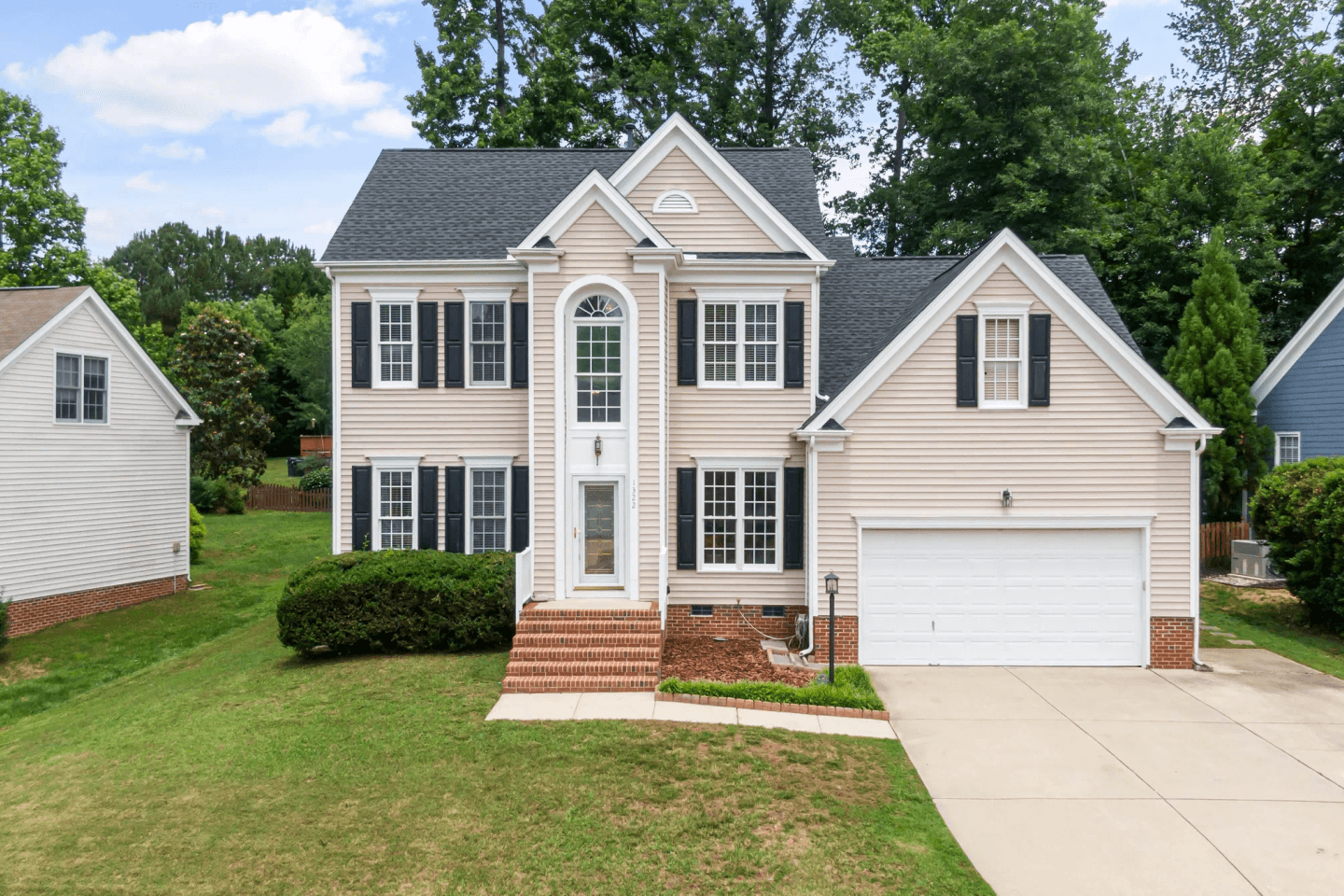
For most Owasso houses, vinyl siding vs Hardie board comes down to three questions: how much hail and fire protection you want written into a warranty, whether you are willing to paint, and how much you want to spend. James Hardie’s HZ10 fiber cement has a flame spread index of zero and a 30-year warranty that names hail. Vinyl costs less and never needs paint, but it can warp from heat a grill or a window throws at it, and vinyl hail coverage depends on the brand and can be thin. The hail, heat and fire points come from the makers’ own warranty papers, the same kind of documents we pass on to you and explain.
T Town Windows & Doors installs both, vinyl and James Hardie fiber cement, as one siding service. We bring samples and brochures to your house, walk every wall with you, and our own crew does the installing. Nearly half of Owasso’s homes were built from 1990 to 2009, and the median home in 2001 (Census figures on our Owasso page), so a house from those years still wearing its first siding has walls 17 to 36 years old.
Best siding for Oklahoma weather
Hail is a regular event around Tulsa, and neither siding is hail-proof. The National Weather Service office in Tulsa says any one location in the metro can expect hail two to three times a year on average, with the peak from mid-April to mid-May (its table runs from 1950 through 1997, measured at Tulsa International Airport).
James Hardie’s warranty for HZ10 siding (effective February 2024) says the boards resist hail damage and lists hail among the damage it pays for. Hardie will refund or replace the damaged boards, or reimburse up to twice their original retail cost. The same document will not pay for labor or accessory materials, and it excludes “severe weather” as an act of God.
Vinyl hail coverage depends entirely on the brand. As one example, Ply Gem’s Mastic vinyl siding warranty has a hail section, but you claim on your homeowner’s insurance first; Mastic then reimburses only the product cost your insurance did not cover, up to the original price, and nothing for labor.
Key takeaway: a hail warranty on siding is not insurance. With either material, the labor to tear off and replace damaged siding comes back to your homeowner’s policy or your own pocket.
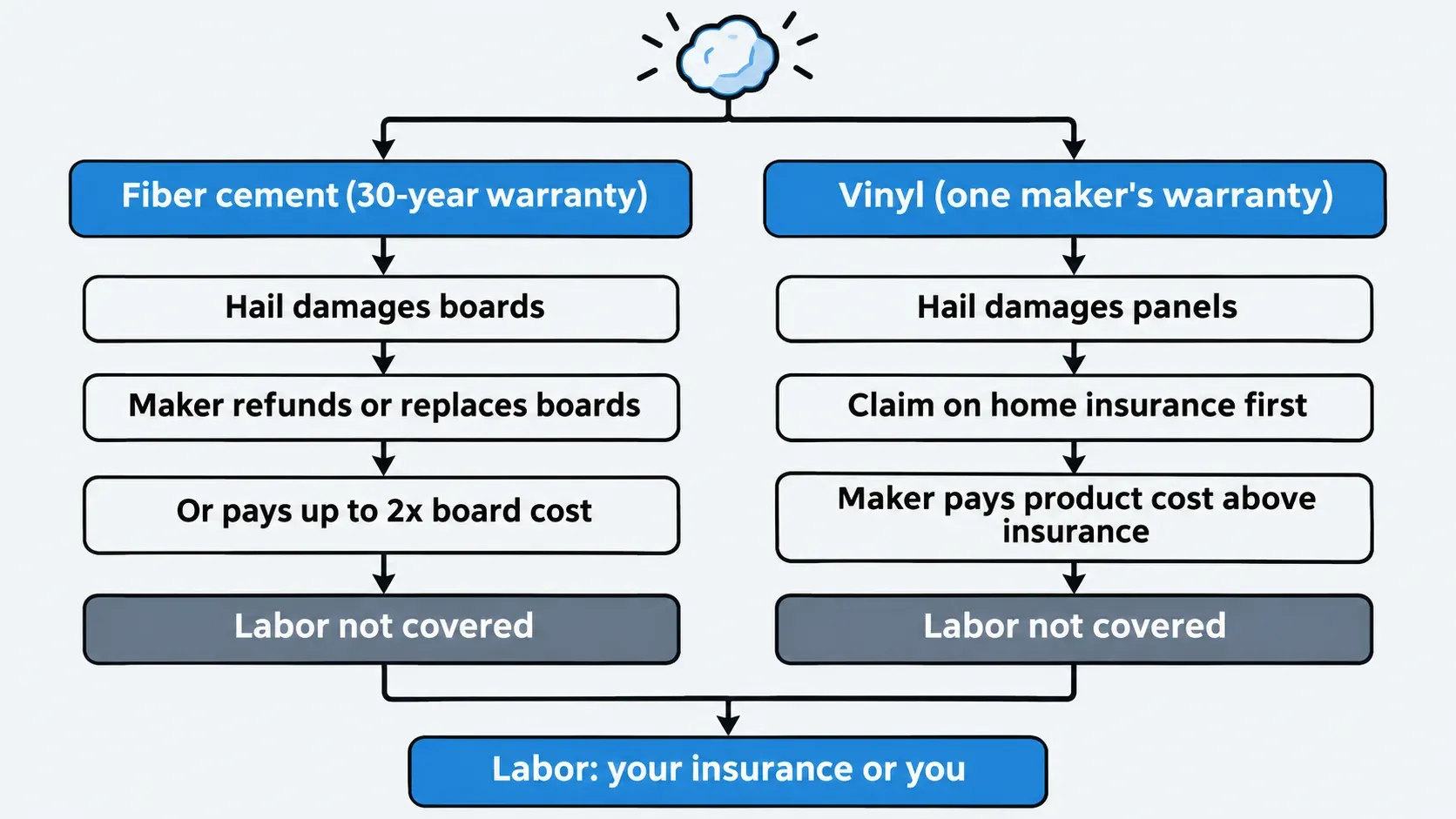
After hail: who pays for the boards, and who pays for the labor, under each kind of warranty.
Wind is the same story. Hardie’s warranty excludes tornados and damage from winds above the boards’ design load as installed, and the Mastic warranty excludes windstorms and tornados.
Vinyl siding melting from glare
Vinyl softens under heat, and the usual culprit is a window, not the sun alone. The Vinyl Siding Institute’s paper on concentrated sunlight says direct sun plus a reflection off normal, flat glass does not routinely get vinyl hot enough to distort. Most cases, it says, come from double-pane glass that has bowed slightly inward, which turns the window into a concave mirror and focuses the reflection onto the wall. Low-E glass reflects more of the sun’s heat than plain glass, and the color of the siding is a secondary factor at most.
On a street of houses, the window doing the damage can be yours or the one next door. The VSI’s fixes are shade: a sunshade over the window, a tree or shrub in the beam’s path, or a screen on the window. If you are adding low-E windows too, our energy-efficient windows guide explains what that glass does.
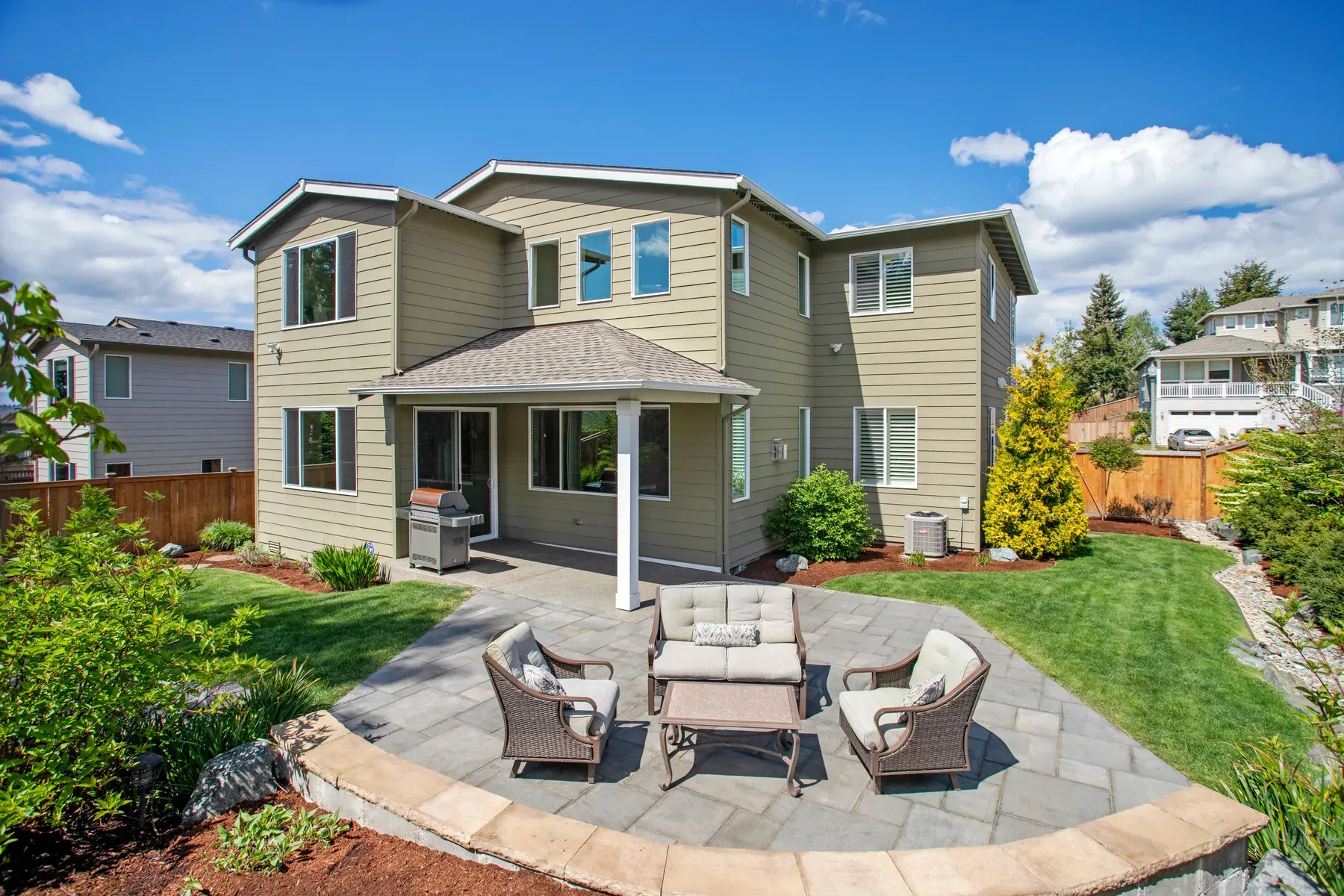
A grill parked near the siding is the other heat source to watch. The vinyl warranty we read leaves grill damage out.
The Mastic warranty excludes warping or distortion from “barbecue grills” and from reflective heat sources such as glass, roofing, pools, decks, blacktop and concrete. Its fade warranty also leaves out Musket Brown and Black siding used on walls. If you love dark vinyl, read that part of whatever warranty comes with your quote.
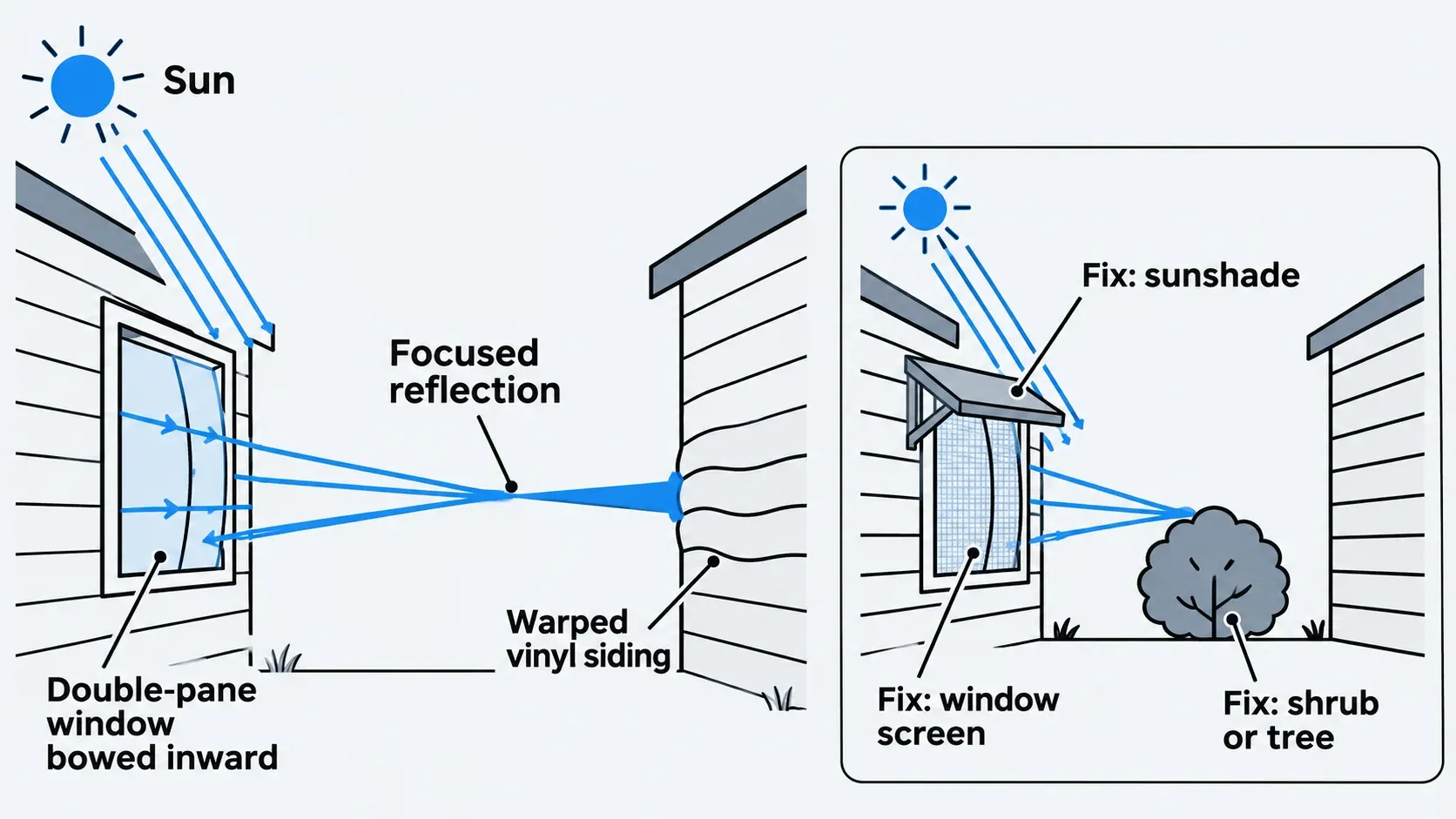
How a bowed double-pane window focuses sunlight onto vinyl siding, and what blocks it.
Fiber cement siding installation
On paper, fiber cement handles heat and fire better, but its warranty asks more of the installer and the owner. Hardie’s warranty covers boards that crack, split or warp from water, heat and freezing, and states a flame spread index of zero under ASTM E84. Ply Gem’s own fire notice says vinyl “will melt or burn when exposed to a significant source of flame or heat.”
The fine print shifts the risk to the install. Hardie excludes damage from installs that skip its published instructions or building code, water getting into the wall, mold, and lack of maintenance. Its care sheet says to wash the siding every 6 to 12 months with a garden hose and a soft brush, and says acid and high-pressure washing can damage the surface, and to replace worn caulk with a paintable latex caulk. What goes behind the boards matters as much as the boards: our siding page walks through the layers.
Painting is where the two part ways for good:
- Vinyl needs no paint, and painting it can cost you the warranty: Mastic excludes siding painted without Ply Gem’s written permission.
- Hardie ColorPlus comes finished from the factory. Its 15-year finish warranty can pay up to $2.15 per square foot for paint and labor in year one, then 6.67% less each year. Normal fading and chalking are not covered.
- Hardie primed boards are painted once they are up, and repainted later. Hardie’s warranty excludes peeling or performance of any third-party paint, so the paint’s own warranty is the one you lean on.
Insulated vinyl siding
Insulated vinyl is vinyl with rigid foam laminated to its back at the factory. The vinyl siding trade group, the Polymeric Exterior Products Association (PEPA), says insulated vinyl siding has at least R-2 of insulation, is tested to ASTM D7793, and must have its tested R-value printed on the package. PEPA counts it as continuous insulation: unlike the insulation between the studs, it is not interrupted by the framing.
If a quote includes insulated vinyl, ask to see that R-value. If your drafts come from the windows rather than the walls, start with our drafty windows guide instead.
Siding replacement cost
Siding replacement cost depends on your walls, not a national average. We do not publish one price per square foot, because these change it the most:
| What changes the price | Why |
|---|---|
| Wall area | More square feet means more material and labor |
| Material | Vinyl, insulated vinyl, Hardie ColorPlus or Hardie primed plus paint |
| Profile and trim | Shakes, board and batten, extra corners and trim pieces mean more cutting and fitting |
| What is under the old siding | Damaged sheathing or wrap has to be fixed before new siding goes on |
| Windows and doors | Each opening needs flashing and trim, more so if windows are replaced too |
| Height | Second stories and tall gables need more staging |
We price your house at the walkthrough, after looking at what is on the walls now, and we hold both materials up against your own siding so you can see them side by side.
Is Hardie board worth the extra cost
Hardie board is worth the extra cost when fire, heat near the walls or a future sale weighs on you; vinyl wins on budget and no-paint upkeep. Use this as a starting point:
| Option | Choose it if | Think twice if |
|---|---|---|
| Vinyl siding | The budget is tight, you never want to paint, and no grill, deck or bowed window throws heat at the walls | You want dark colors, or full warranty value for a buyer (after a sale, Mastic’s coverage is prorated, down to 10% after year 14) |
| Insulated vinyl | You want vinyl plus foam over the studs | The quote does not show its tested R-value |
| Hardie ColorPlus | You want boards that do not spread fire, a factory finish and a 30-year board warranty, not prorated, that also covers the first buyer of the house | Upfront cost is the deciding factor |
| Hardie primed | You want any paint color and will repaint over time | You do not want a paint job in your future |
The honest point against the bigger sale: if no grill, deck or neighbor’s window throws heat at your walls and you plan to stay, the heat exclusions in a vinyl warranty may never come into play. Hardie’s hail coverage still does not pay labor, so on a house like that the extra cost buys less than it seems.
Before you choose
- Find out which vinyl brand is on the quote and read its hail, heat and fade sections
- Look for low-E windows, yours or a neighbor’s, that face your walls
- Check where the grill, deck and blacktop sit against the siding
- Decide whether you will repaint (Hardie primed) or never paint (vinyl or ColorPlus)
- Ask your insurer how it handles hail damage to siding
- Get both materials priced on the same walkthrough
When you are ready, book a free walkthrough and we will bring samples of both. More guides are on our resources page.